
Albuquerque Sign Language Academy & NM Developmental Disability Workforce Training Center
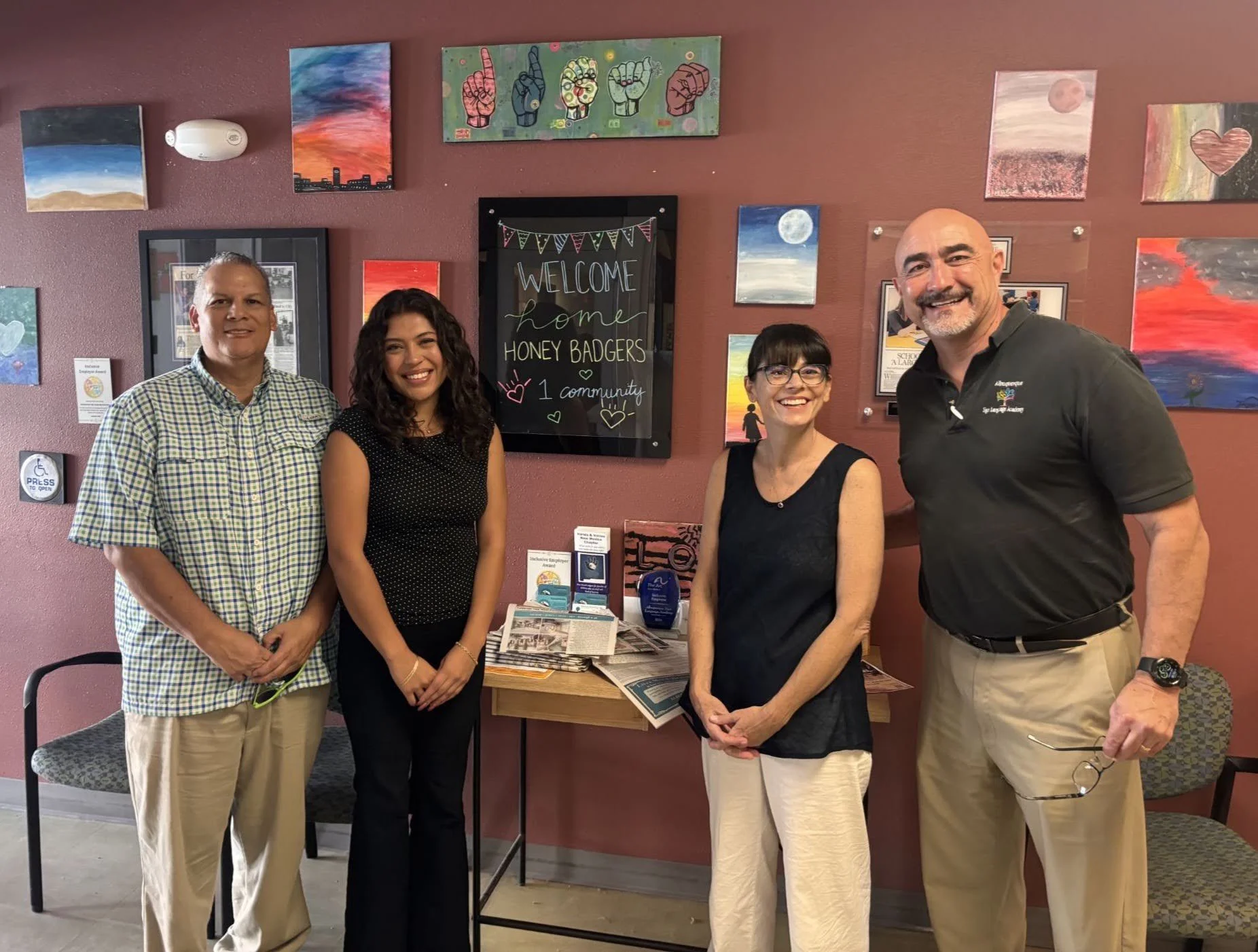
I’m proud that New Mexico is a state where families can choose the public school that best fits their child's learning needs. I got to see that on full display when I toured the Albuquerque Sign Language Academy (ASL Academy) and its sister organization, the New Mexico Developmental Disability Workforce Training Center (NMDDWTC).
Founded by Rafe and Jennifer Martinez, to meet the needs of their son, ASL Academy serves students from kindergarten through high school, and NMDDWTC continues that mission for adults with developmental disabilities. It helps them train for jobs and find work.
ASL Academy is a free public charter school and is the first in the nation to teach deaf, hard of hearing, and hearing students together in the same classrooms. Students learn in both English and American Sign Language. Deaf and hard of hearing students gain the skills they need for the wider world. Hearing students, many of whom have deaf family members, become fluent in sign language and can communicate fully with their families and classmates.
The school serves about 185 students and has a long waiting list. I was glad to get an update on its new campus at Edith Boulevard and Tyler Road NE, which opened in September. Funded in part through the state’s capital outlay, the new campus will allow the school to increase their capacity to serve students.
One thing I didn't know before my visit is how much the training center does for adults once they leave the classroom. NMDDWTC offers job training and paid work that help adults with developmental disabilities live more independently and take part in their community.
It does this through its own business, Honey Badger Industries, and through local partners that hire its trainees. While we were there, we stopped by one of the training center's coffee-making classes and saw firsthand how the center trains workers, and how it helps employers build on the strengths of each employee.
Through my work on the House Appropriations and Finance Committee, I see state funding as it is distributed to our public schools. The opportunity to see how these dollars make a difference not just in the lives of students, but also their families, is tremendous. I look forward to finding ways to support schools and programs that serve students and adults with unique needs across our state.